Is an indoor pizza oven really better than my regular oven?
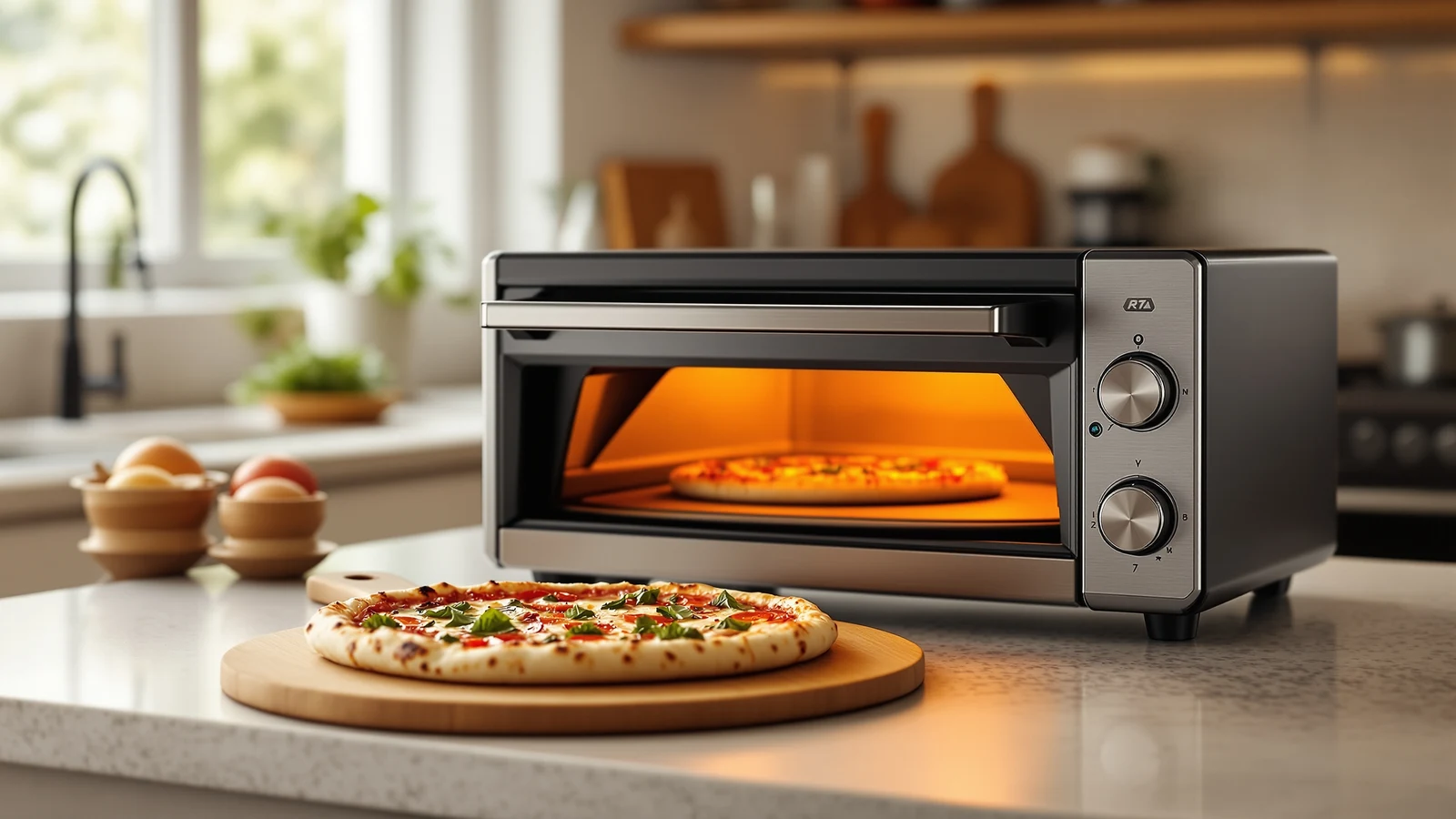
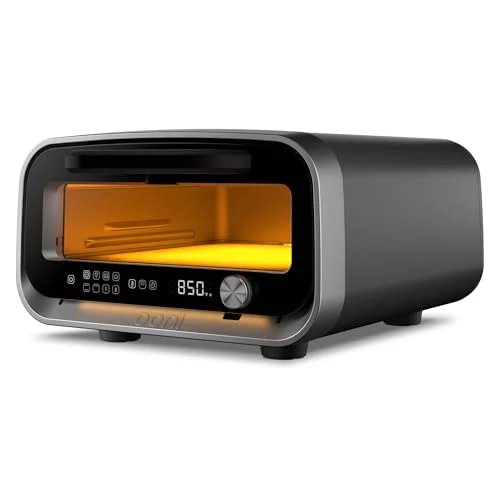
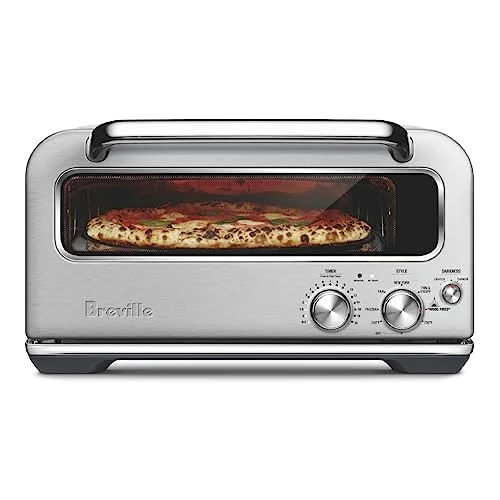
For pizza, usually yes, and the reason is geometry as much as heat. Most home ovens top out around 500 to 550 degrees Fahrenheit and heat a large box from elements a long way from the pizza. A countertop pizza oven is a small box built around one stone, with an element above it and one below, and the high-heat models in this category are rated from 700 to 850°F. That is how their makers claim pizzas in anywhere from ninety seconds to six minutes. The trade is counter space, one pie at a time, and a machine that does fewer other jobs — unless you buy one sold as a countertop oven too, like the Ooni Volt 2.
Will an indoor pizza oven trip my breaker?
It can if it shares a circuit. A standard US outlet is rated 15 amps at 120 volts, about 1,800 watts, and an oven listed at 1,700 or 1,800 watts uses nearly all of that on its own. Run a kettle or a microwave on the same circuit at the same time and the breaker will do its job. Give the oven an outlet on a circuit with nothing else heavy running, and plug it straight into the wall rather than into a light-duty extension cord or power strip. The commercial double-deck ovens listed at 2,700 and 3,600 watts are a different matter entirely and are not built for a standard household outlet.
Is the 800°F on the box real?
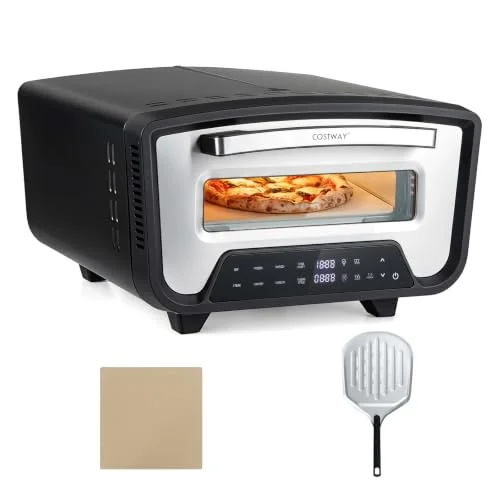
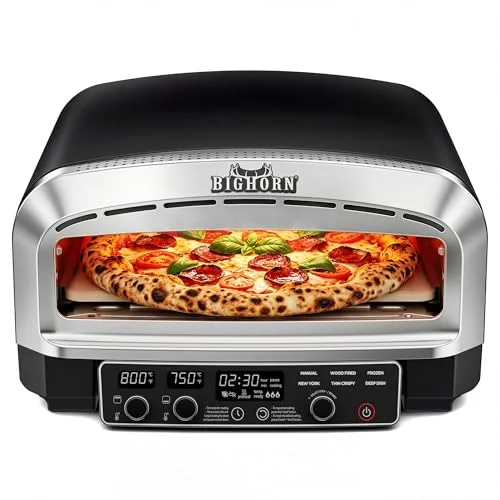
Treat it as a ceiling rather than a promise. Almost no listing says where the figure is measured — at the element, in the air of the chamber or on the stone the pizza sits on — and those can be very different numbers. Notice that several 1,200-watt ovens claim 800°F while an 1,800-watt one claims 750°F. The more useful figures are the ones makers publish less often: a preheat time, as Cuisinart (20 to 30 minutes), COSTWAY (20 minutes) and BIG HORN (15 minutes) state, and whether the controls let you set the top and bottom heat separately. If a listing gives a maximum and nothing else, that silence is information too.
What size pizza oven should I buy?
Twelve inches, unless you have a reason. Nearly every high-heat oven in this category takes a 12-inch pizza. A 14-inch pie has about 36 percent more surface, which is the whole argument for 14-inch ovens such as the BIG HORN and the Piezano XL. A 16-inch has about 78 percent more, but the plug-in 16-inch ovens we found that publish a maximum list 572°F and 662°F — fine for New York-style and frozen pizza, not for a blistered Neapolitan crust. Measure your counter before you measure your appetite: the larger ovens are large boxes, and they need clear space around them while hot.
Can I bake frozen pizza in a high-heat pizza oven?
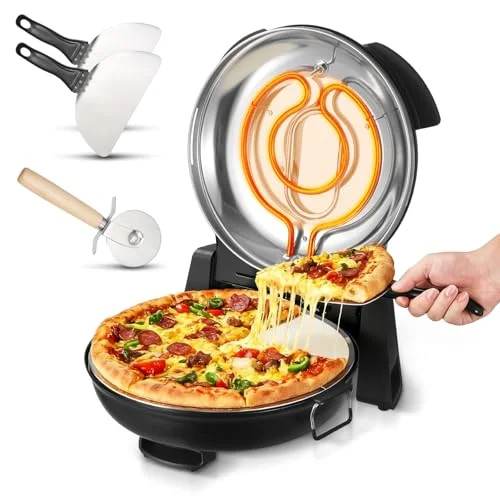
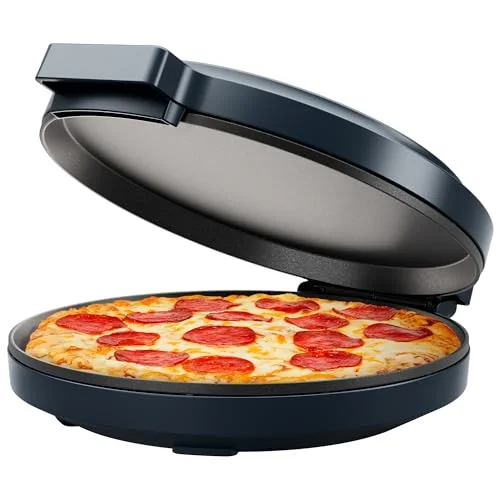
Yes, and most of the preset ovens include a Frozen setting for exactly that — Breville and COSTWAY both list one. But frozen pizza is made to bake through at ordinary oven temperatures, and the presets show it: Willow lists its Frozen setting at 400°F against 750°F for its Wood Fire setting. Full heat on a frozen pie risks a charred top over a cold middle. If frozen is most of what you eat, a rotating maker such as the Presto Pizzazz Plus does the job without paying for heat you will not use.
How do I clean a pizza stone?
Let it cool completely in the oven first; a hot stone meeting cold water can crack. Then scrape off anything stuck with a dough scraper or a dry brush — several of these ovens ship with a scraper for exactly this. A bare stone is porous, so do not soak it or wash it with soap, which it can absorb. Darkening is normal: OSTBA’s listing says plainly that natural darkening may occur after use and does not affect performance. Glazed and nonstick-coated plates, which some cheaper ovens use, are a different surface — follow the maker’s cleaning instructions for those.
Can I use an outdoor pizza oven indoors?
Not a fuel-burning one. Gas, wood, charcoal and pellet ovens belong outside; they are a different category and this site does not cover them. The grey area is electric ovens marketed for outdoor use: Ninja’s own listing describes its Artisan as an outdoor appliance for backyard entertaining. If an electric oven is sold that way and you want it for the kitchen, read the manufacturer’s guidance on indoor use before you buy, not after.